

Oystershell scale
Oystershell scale (Diaspidiotus ostreaeformis) is a small insect that attaches itself to bark and causes damage by feeding on the trunk and branches of fruit trees. This is a relatively uncommon pest in NSW temperate fruit orchards.
Pest identification
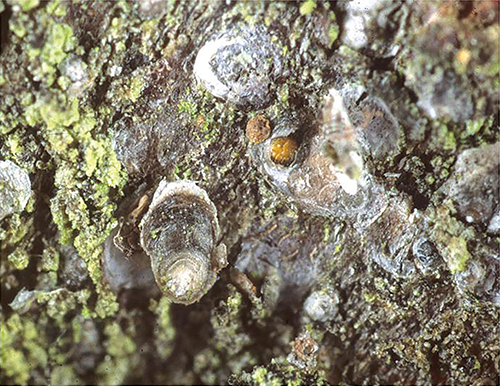
The covering of the female oystershell scale is usually around 4 mm long, elongated and tapers to a point. They are often slightly curved, resembling an oyster shell. They are usually brown with waxy scales that are cream on the underside. They have short antennae but no eyes or legs.
Damage
Oystershell scale insects feed on the trunks and branches of fruit trees, killing the areas at the feeding site. Heavy infestations will reduce growth, cause foliage yellowing and bark cracking, and can lead to plant death.
Monitoring
Monitor branches for oystershell-shaped bumps and yellowing leaves to determine the correct timing for control, which will reduce oystershell scale populations.
Management
Cultural and physical: strong, healthy plant growth can reduce the likelihood of scale infestations. On young trees, old scale covering and eggs can be destroyed by scrubbing the bark. Heavily infested branches should be pruned.
Biological: oystershell scale has very few natural predators for control. Parasitic wasps and predatory mites have been observed to feed on overwintering eggs, but control levels are minimal.
Chemical: horticultural mineral oils registered for use against oystershell scale vary in their suitability for use as a summer or winter treatment. Discuss product choice and correct time of use with your chemical supplier and always consult the product label. Check the APVMA PubCRIS database for registered controls (https://portal.apvma.gov.au/pubcris).
