

Cherry aphid
Cherry aphids (Myzus cerasi) can be a significant pest in all stone fruits, feeding on leaves and shoots, which can result in reduced and deformed growth.
Pest identification
Adult cherry aphids are dark and approximately 2 mm long. The adult population consists of winged and wingless individuals. The nymphs are dark brown to black. Cherry aphid eggs are shiny, oval-shaped and usually found on the underside of leaves.
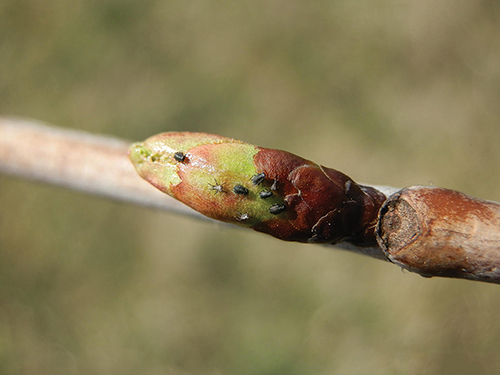
Cherry aphids on a bud. Photo: Mariusz Sobieski, Bugwood.org.
Damage
Aphids will often inhabit terminal leaf shoots, particularly young leaves. Infested leaves will curl, providing a protected space for aphids to continue feeding. Honeydew secreted by the aphids can result in sooty mould growth on the fruit, making it unmarketable. If the infestation is severe, leaves might turn brown and drop.
Monitoring
Examine trees regularly during and shortly after budbreak for aphids. Particular attention should be paid to the terminal shoot tips. Continued monitoring each fortnight until harvest is recommended.
Management
Cultural and physical: high levels of nitrogen can promote soft new growth and this is favoured by aphids. Using smaller, more targeted amounts of fertiliser throughout the growing season can help moderate vegetative growth and reduce aphid infestation. Good weed management can reduce potential harbours and therefore reduce migrating aphid populations.
Biological: fortunately, good aphid control can be achieved using naturally occurring biological agents. Lacewings are aggressive general predators that will feed on aphids and can provide useful control. Lady beetles can be important aphid predators as both the adults and larvae feed on aphids.
Chemical: check the APVMA PubCRIS database for registered controls (https://portal.apvma.gov.au/pubcris).
