
Foreshore structures
This sub-action improved community foreshore access and safety by removing impacted structures. Removal minimised their environmental impact and improved riverbank resilience in the face of future flood events.
We worked with Councils and State Agencies to remove unsafe and redundant structures impacting public foreshore and intertidal areas.


Completed project
Curleys Bay pollution removal from mangrove habitat

Completed project
Moonee Bridge removal
Completed project
Macleay River jetty removal
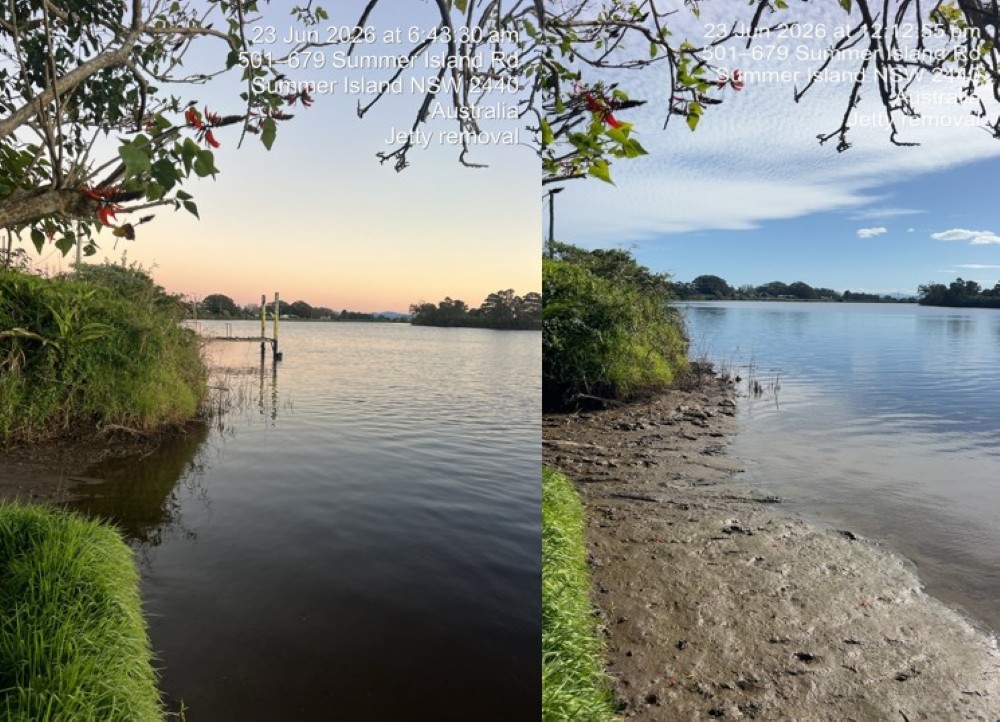
Completed project
Bohnock Wharf removal

Completed project
Ettalong Jetty removal feasibility assessment - image credit Mick Howland
Curleys Bay Wetland
Curleys Bay wetland, located on the Crookhaven River, is a protected intertidal area of coastal wetland. Over time waste materials have been dumped and illegal and unsafe structures have been built. These materials are at risk of mobilisation during flood events, posing pollution risks and impacting protected vegetation, intertidal habitat and water quality.
Through this project, more than 4 tonnes of harmful waste has been removed, including tyres, building debris, asbestos, engine blocks, and 85m2 of plastic matting!
This cleanup has enabled the successful rehabilitation of over 200m2 of protected coastal wetland, allowing the natural regrowth of mangroves and saltmarsh, and restoration of intertidal habitat.
Moonee Creek Bridge
A joint project with Crown Lands saw the removal of the flood impacted bridge at Moonee Creek at Coffs Harbour. The dilapidated pedestrian bridge was located in highly sensitive estuarine environment within an area of Coastal Wetland in Solitary Islands Marine Park.
Due to the protected status of the area an Environmental Impact Study and environmental approvals were commissioned by Crown Lands. Funding from the NEAP program was then used to engage Soil Conservation Service to remove the unsafe structure using best practice methods.
Bohnock Wharf
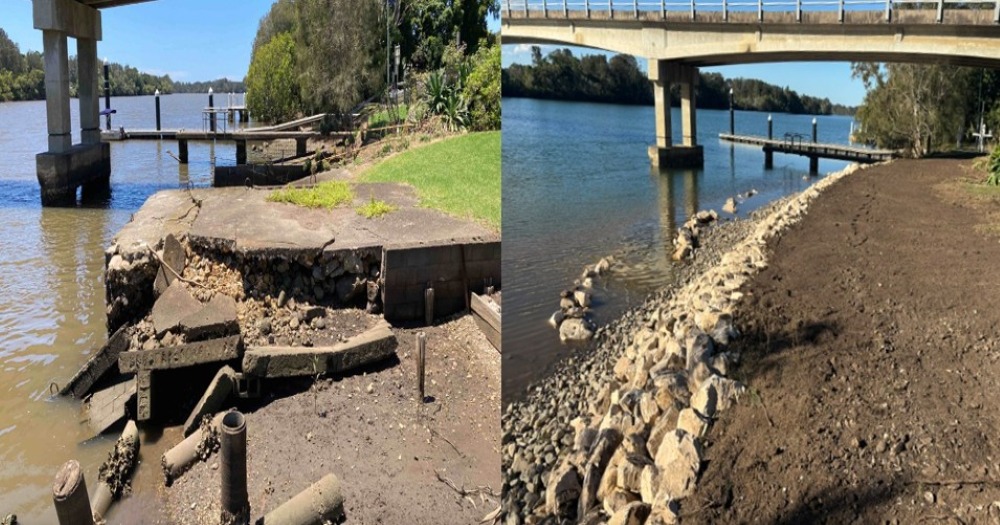
Bohnock Wharf and its boating infrastructure were located on the Manning River. The structures had become unsafe and were contributing to riverbank instability. Removing the structures was the best way to boost riverbank health and strengthen it against future floods impacts.
In total, 96 tonnes of concrete and building waste were removed during the project. Cobble beaching was installed to improve bank stability. These rocks protect the base of the riverbank. The bank was further protected by native plantings.
We thank the local Aboriginal community for supervising the work. Their involvement ensured that Aboriginal objects were not damaged during excavation.