
Overview
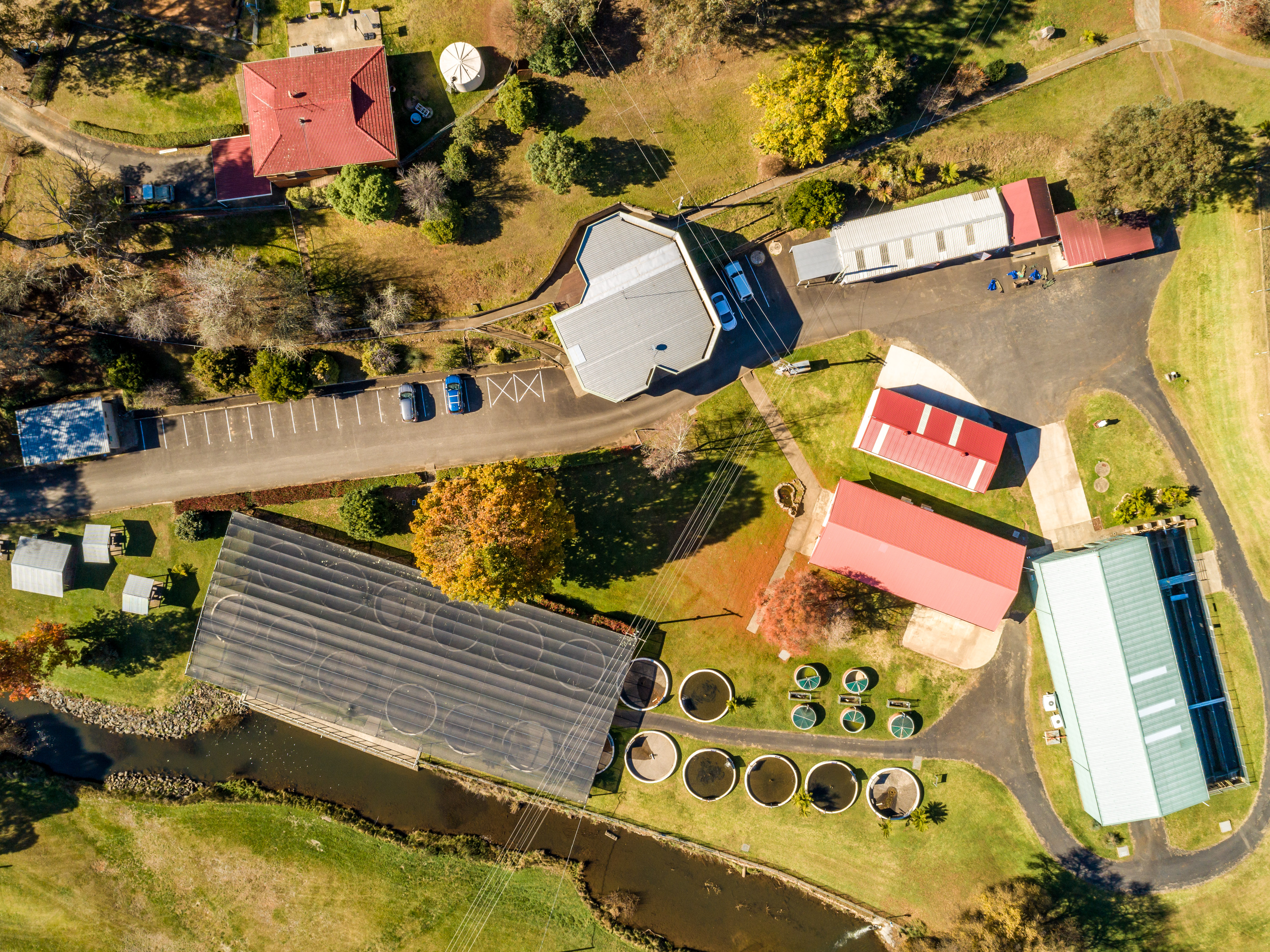
The Ebor Dutton Trout Hatchery is situated on the Serpentine River which provided a more reliable water supply and is one of two NSW Government facilities for breeding and rearing premier cold water sport fish. It has operated for over fifty years due to the NSW Government’s commitment to recreational angling and the growing popularity of trout fishing.
Dutton produces two fish species: Rainbow Trout and Brown Trout. The fish are bred from hatchery broodstock and grown out to fry (small fish), when they are released into selected cold water public rivers and lakes of NSW. Both rainbow and brown trout are bred for release into public waterways in the New England and Central Tablelands and Southern Highlands with 2 million fish bred annually. Trout may be caught in the wild on flies, lures and baits.
Our research
Research at the hatchery is primarily focused on rainbow and brown trout stocking in NSW.

Our facilities & services
The hatchery has a range of research, education, farming and community resources.

Visit, Event and More
Officially opened in 1952, the hatchery has been breeding freshwater species for over 68 years.

Key Programs and Initiatives
Fishing
Fishing
Work with us
If you would like to utilise our research facilities or services, or explore partner and -co-location opportunities please fill out this Request for Opportunity Form
Research station request for opportunity formOur region
The Northern Slopes and Tablelands has a comprehensive range of support services and infrastructure, processors, transport and logistics, professional services and farm supplies. Before agricultural produce makes it to market, there are inputs such as fertiliser, fuel, technical support services such as agronomists, vets and mechanics, processing facilities, transport and infrastructure, etc.
There is also substantial movement of produce within the region supplying grain to intensive animal producers and moving livestock to processing plants. The interactions of these agricultural industries with their secondary industries is a critical consideration in planning for agricultural land uses. Good transport networks, with the New England Highway providing the main access south to Newcastle and Sydney and north to Brisbane.
Production stats from 2021-22
| Cattle and calves | 414,474,310 | 15% | 2 |
| Sheep and lambs | 78,479,634 | 6% | 7 |
| Wool | 52,961,677 | 6% | 7 |
| Tomatoes | 25,336,231 | 25% | 2 |
| Wheat | 12,992,431 | 0% | 8 |
| Barley | 11,559,234 | 1% | 7 |
| Milk | 9,183,676 | 1% | 10 |
| Hay | 8,629,351 | 2% | 9 |
| Sorghum | 7,232,646 | 4% | 3 |
| Oranges | 5,668,030 | 2% | 5 |
| Total primary industries | 687,116,269 | 4% | 11 |
Source: ABS 2022
Climate
Located 1300 mts above sea level in the Northern Tablelands of NSW adjacent to the world heritage New England National Park and Gondwana Rainforests. The climate is warm and temperate in Ebor and there is significant rainfall throughout the year with even the driest months still receiving significant rainfall. The average annual temperature is 11.8 °C and approximately 1287mm of precipitation falls annually.
Our history
Dutton Trout Hatchery owes its beginning to the late Les Dutton who started operations in 1925 on his property near Guyra. In 1949 the hatchery was transferred to its present site on the Serpentine River.
Many of the site’s facilities were constructed with the generosity of volunteers such as the Acclimatisation Societies, and anglers clubs. They excavated the grounds and constructed ponds, wooden troughs and buildings.
Ebor Dutton Trout Hatchery Video
Contact
Phone: (02) 6775 9139
International: +61 2 6775 9139
Fax: (02) 6775 9186
Location
336 Point Lookout Rd
Ebor NSW 2453